Assisted living has come a long way from old-fashioned models of care – today, technology is re-defining how seniors live, connect and remain independent. From smart-home systems keeping track of safety to wearables that can continually assess health, the expansion of smart devices is turning senior care into a much more personal, responsible, and empowering experience.
As life expectancy increases and family members look for ways to assist parents and grandparents for as long as they can without jeopardizing their safety. Technology provides a perfect fit between the two — independence for seniors, and peace of mind for caregivers. In this article, we will look at how these advances in technology are changing assisted living in ways that will have a revising effect on how older adults live out their daily lives, making it safer, easier, and more enjoyable!
1. Smart Home Devices: Making Spaces Safer and More Comfortable
Smart home technology has turned the concept of aging in-place not only into a reality but also into a very convenient one.
Main breakthroughs are:
- Smart Lighting: Its motion-sensor feature prevents falls, which are common at night and even provides better light for the seniors.
- Virtual Assistants Operated By Voice (For Example Alexa Or Google Home): They help older people a lot just with the help of their voice through the easy commands of switching off the lights, controlling the temperature, or call the family.
- Smart thermostats: Provide a very comfortable and energy-efficient temperature by automatically controlling it.
- Smart locks and door cameras: Allow family, caregivers, or any authorized person to see and monitor who enters and exits the house, thus making the premises safer.
And the reason this is important is due to the fact that these gadgets help the seniors to spend less energy and, at the same time, avoid the risky small tasks that are usually done in homes, which results in the home being safer and more user-friendly for seniors with mobility or vision difficulties.
2. Health Monitoring Wearables: A Lifeline on the Wrist
The use of modern wearable technology has changed the outlook of seniors and caregivers towards healthcare.
Frequent Options are:
- Medical alert systems: Recognize tumbles and promptly alert the listed emergency contacts or the already selected emergency service.
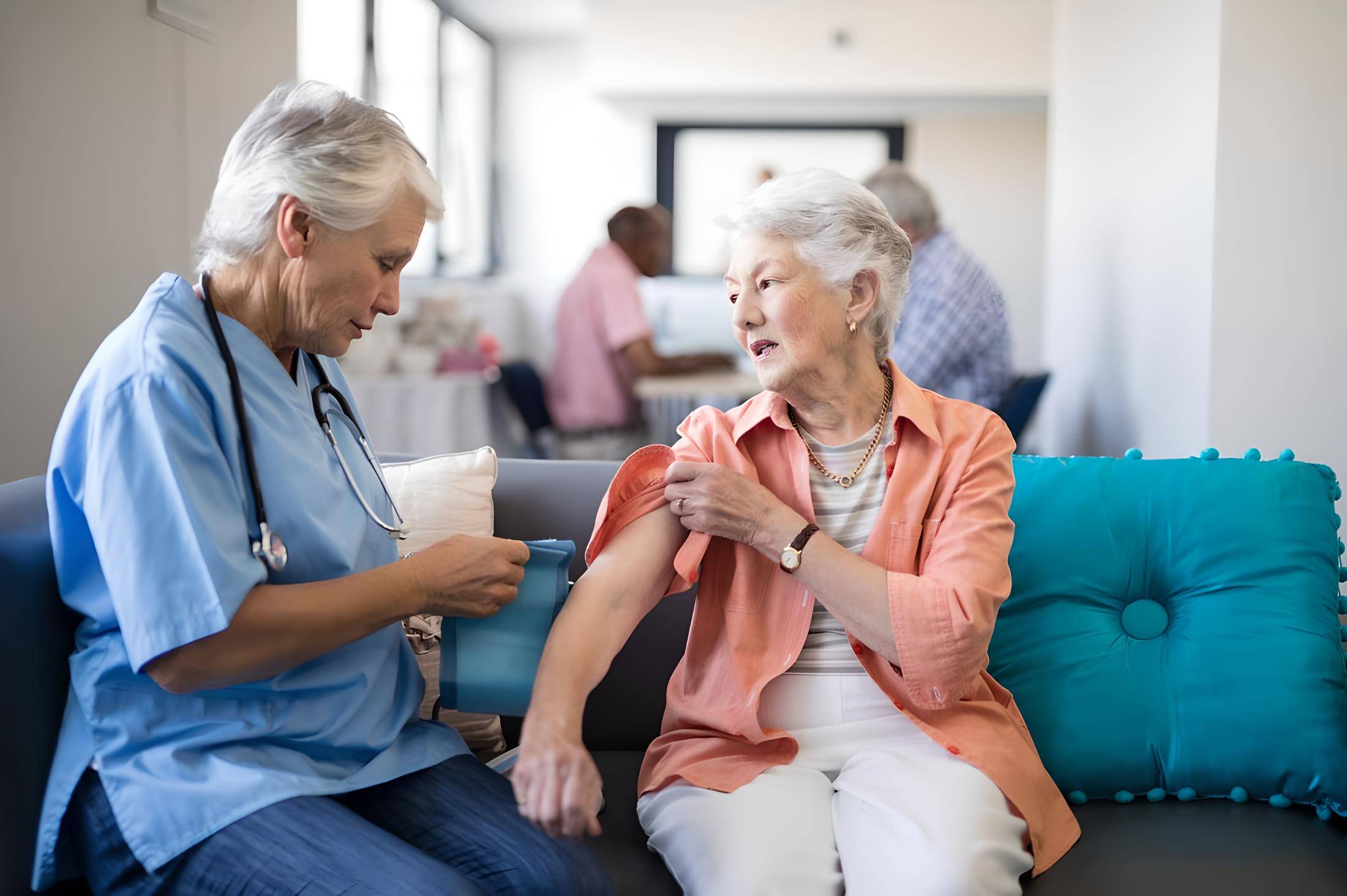
- Long-distance electrocardiogram or blood pressure monitors: Comprehensively transmittable through the corresponding mobile applications, the patient is connected via health data.
Real-life impact: Irregular heartbeats can now be detected or fall alerts issued by a sophisticated smartwatch—often before the user is even aware of the problem. The constant monitoring of health conditions thus becomes a source of comfort for seniors and their families alike.
3. Connected Health Platforms and Remote Monitoring:
Telehealth and Remote Patient Monitoring (RPM) have come hand in hand and are now changing the way doctors provide care to the elderly in assisted living facilities.
Main advantages:
- Seamless transfer of health information (such as glucose level or pulse rate) to the doctor’s office.
- AI-supported analytics leading to early acknowledgment of medical problems.
Illustration: An elderly person with an online glucose meter may have their readings automatically transmitted to the doctor, who can right away change the drug dosage — thus preventing a possible emergency room visit.
4. Smart Safety and Security Systems:
The primary reason for assisted living is safety. Modern technology has allowed home monitoring to be both smooth and very discreet.
The new developments consist of:
Fall detection sensors placed in floors or in furniture.
Smoke and CO2 detectors that instantly notify the caregivers’ mobile phones.
- Video monitoring (with consent) assists families in ensuring that their relatives are safe while not infringing on their privacy.
- Geo-fencing instruments that alert caregivers whenever Alzheimer’s patients exit the pre-determined safe zone.
- The outcome: These kinds of systems provide nonstop protection and, in case of a crisis, the assistance arrives rapidly.
5. Smart Mobility and Assistive Devices
The technology regarding mobility has been steadily rising, which will not only help promote independence but also ensure safety at the same time.
Some of the prominent examples:
- Obstacle detection sensors in electric mobility scooters.
- The above-mentioned innovations are given to seniors as a way of allowing them to move freely and with grace while keeping up with their surroundings.
Conclusion: Technology with a Human Touch
Assisted living technology is not a human replacement — rather, it is an enhancement. The use of smart devices enables older adults to be independent, safe, and to have their dignity respected, while caregivers are able to provide better support based on the data they have.
Innovations like wearable health trackers and smart home systems are making lives active with comfort, safety, and companionship. The future of assisted living is not only tech-savvy — it is also very humane, joining kindness with technology to make sure every older person has confidence, connection, and care.